Digitizing bound materials within structured digitization workflows
Bound materials such as books, manuscripts, and archival volumes require controlled handling during digitization. Standard scanners cannot process these materials without risking damage.

Typical environments
Book scanners are deployed in environments where bound materials are part of operational or archival processes. Common use cases include:
- Digitization of library collections and rare books
- Preservation of manuscripts and archival volumes
- Conversion of bound records into digital archives
- Providing digital access to physical collections
- Cultural heritage digitization projects
- Academic and research digitization initiatives
Requirements vary depending on material condition, format, digitization standards, and the role of the archive.
What it is
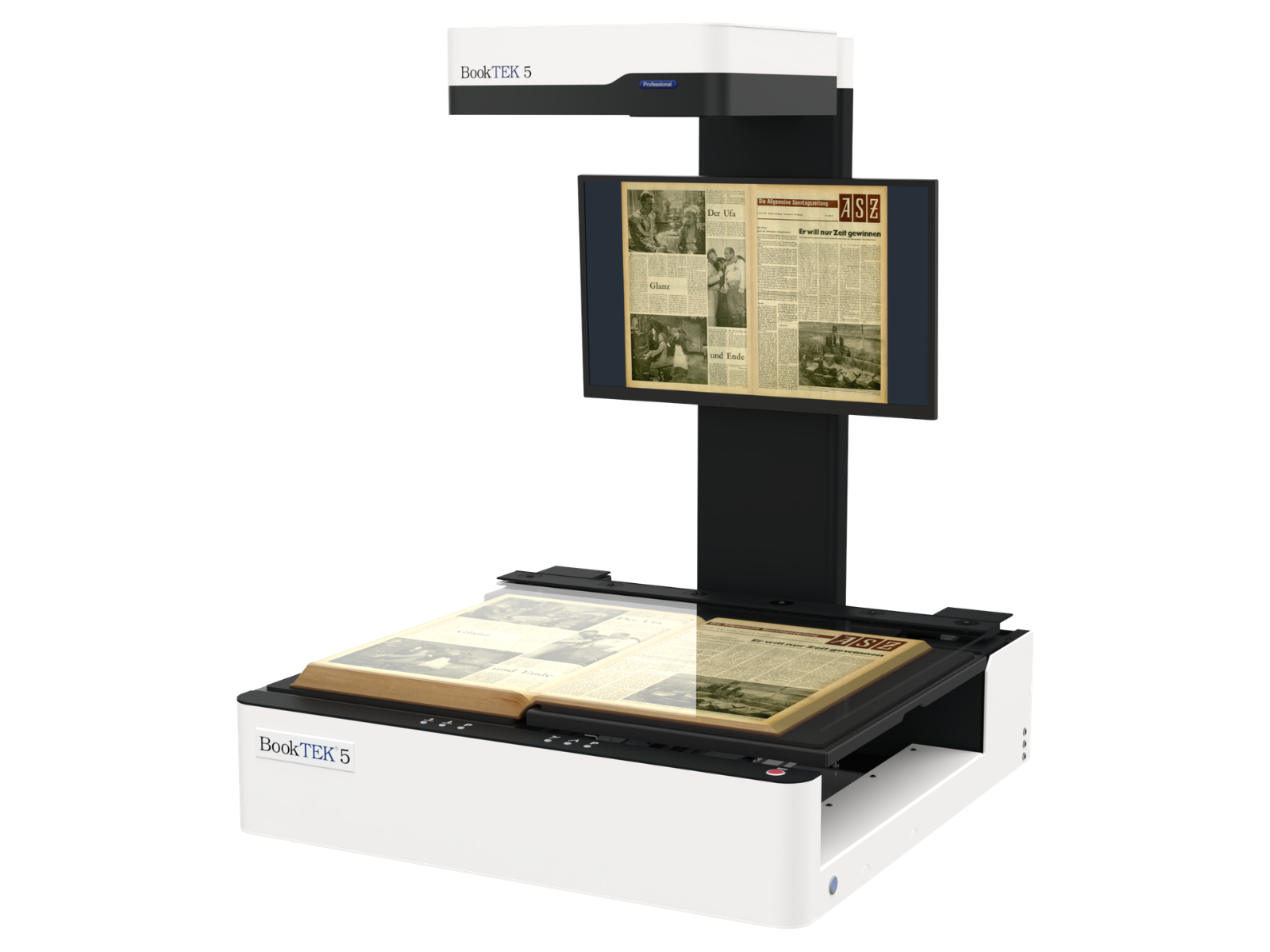
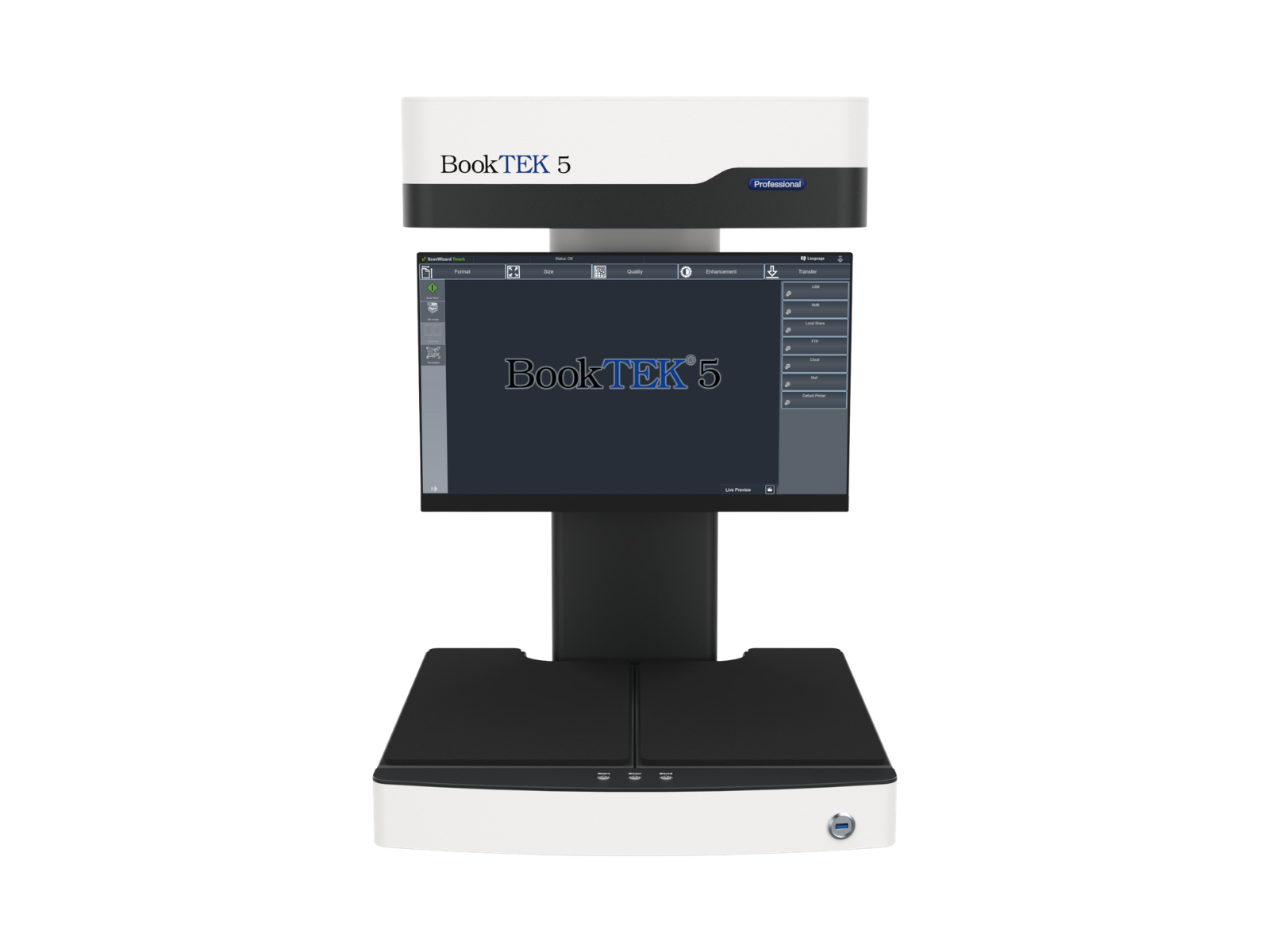
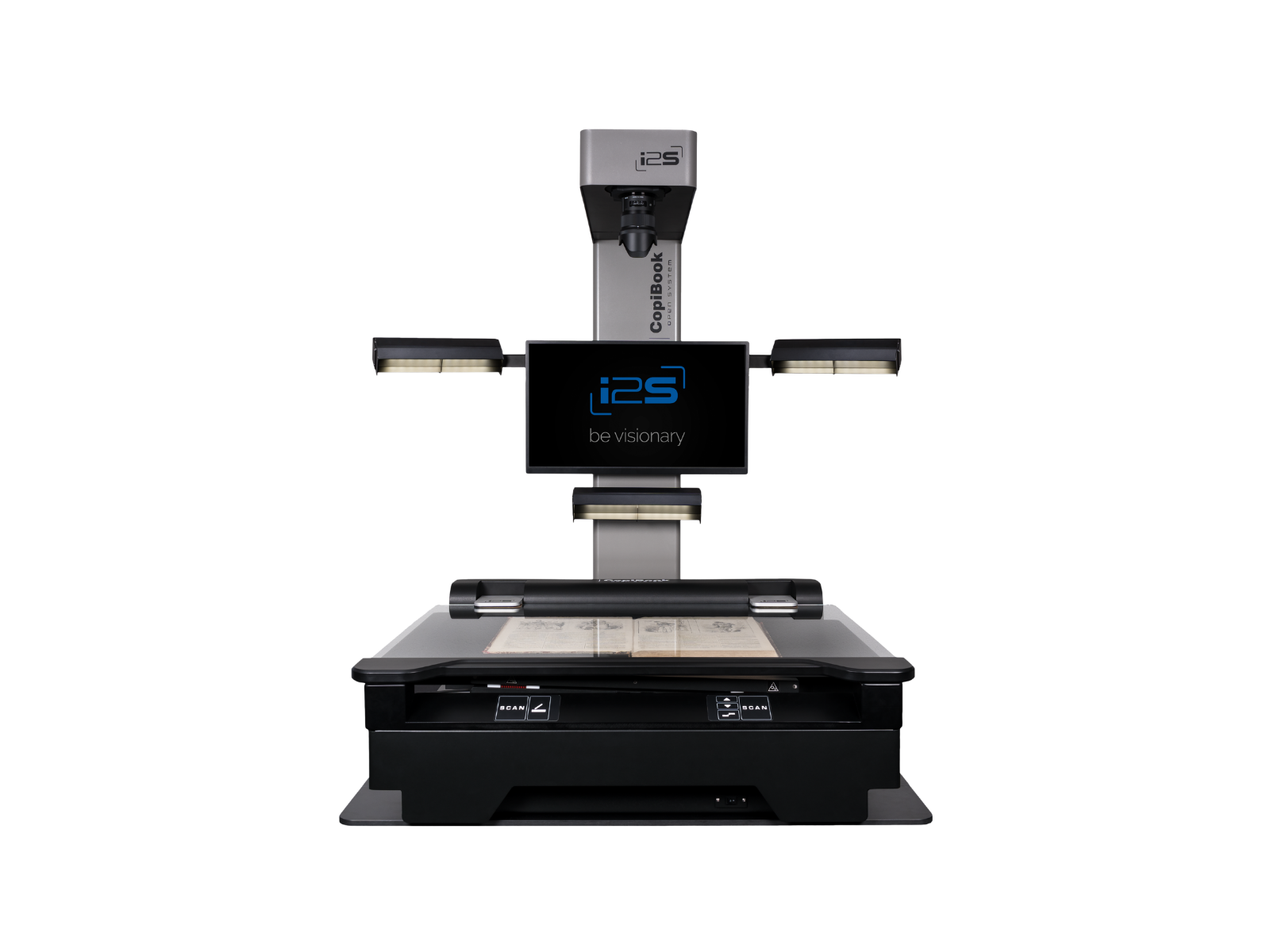
Book scanners are overhead scanning systems designed specifically for bound materials.
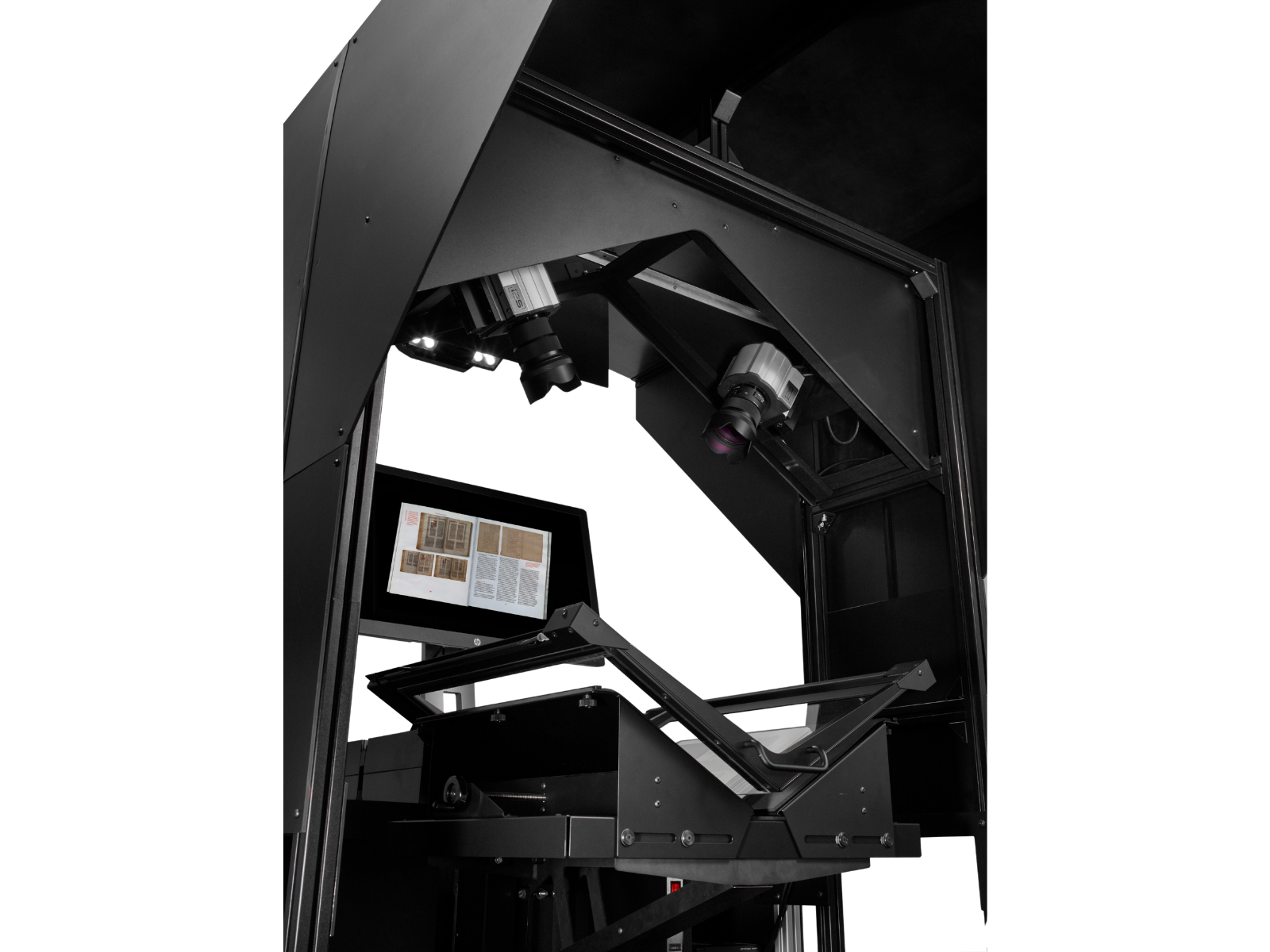
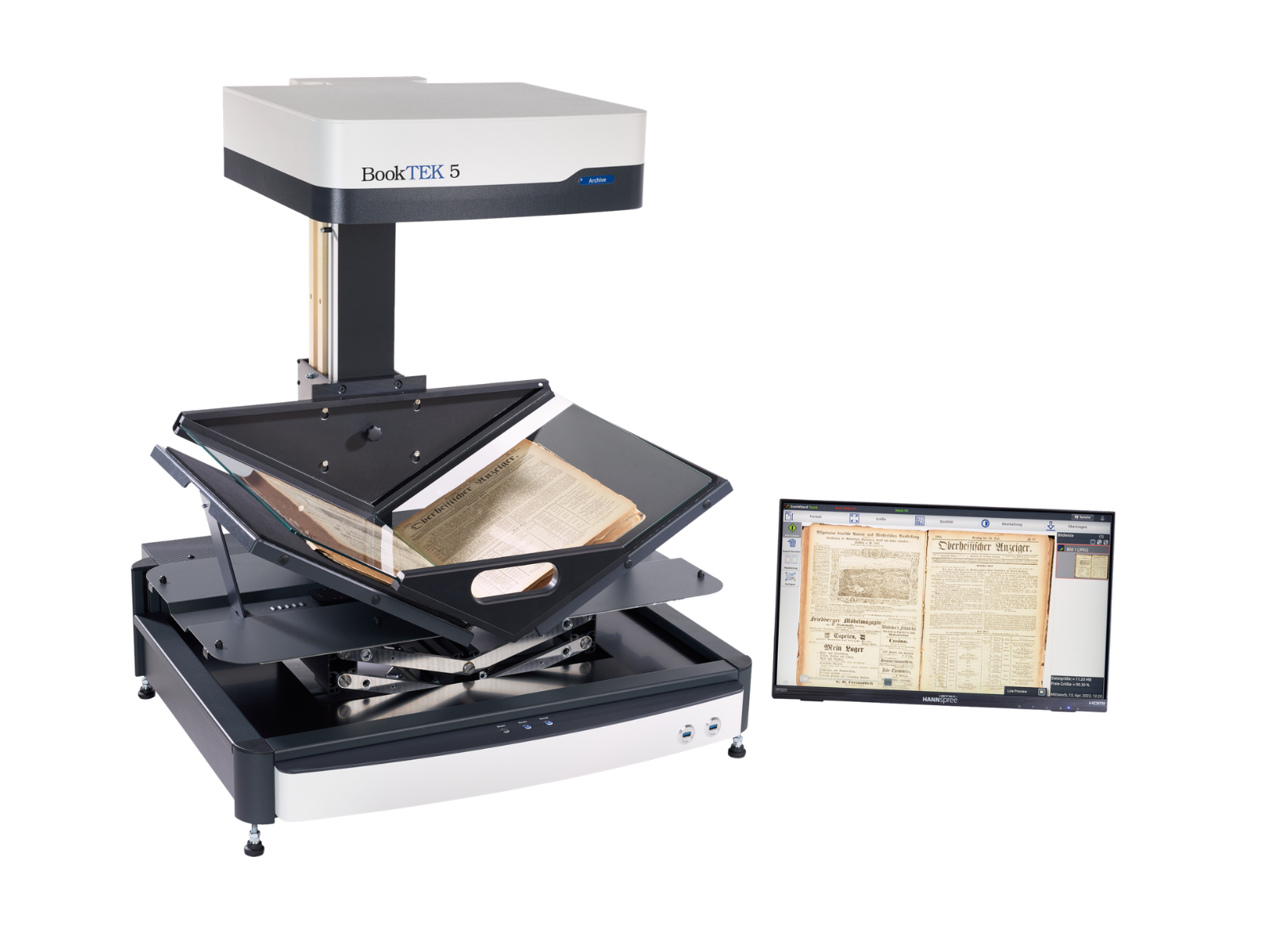
Unlike sheet-fed or flatbed scanners, they capture pages from above while the document is supported in a cradle. This approach protects the spine, maintains page structure, and reduces physical stress on the material.
They are used when document preservation is a priority alongside image quality and consistency. This makes them suitable for libraries, archives, museums, and institutions managing fragile or high-value collections.
How it works
Book scanners use a controlled overhead capture process designed for bound materials.
Typical steps include:
- The book is placed in an adjustable cradle that supports the spine and opening angle
- Overhead cameras or scanning sensors capture pages from above
- Image processing corrects distortion and improves clarity
- Files are exported as high-resolution images or searchable documents
This process maintains page geometry and supports consistent digitization while minimizing handling risks.
Selection considerations
Selecting a book scanner depends on how it will be used within the digitization workflow. Key factors include:
- Condition and fragility of materials
- Book size, thickness, and format
- Required image quality and consistency
- Digitization volumes and project scope
- Integration with OCR, metadata, and archive systems
- Operator workflow and ergonomics
These factors define the required system configuration and capture approach.
Role within Dyanix solutions
Book scanners support the capture and preservation stage of structured digitization workflows.
They are typically implemented alongside:
- OCR and text recognition software
- Metadata capture and indexing systems
- Digital asset management platforms
- Archival storage and preservation systems
Within Dyanix solutions, book scanners are often positioned within broader workflows such as:
- Document digitization and capture solution
- Specialized document scanning solution
- Digital preservation and compliance solution
This ensures that captured content is not only digitized, but also structured, accessible, and preserved for long-term use.
Technology providers
Dyanix works with selected technology providers that specialize in professional book digitization systems.
These include:
- Image Access
- i2S
- Zeutschel
Platforms are selected based on document type, preservation requirements, digitization standards, and workflow integration needs.
Assessing book digitization requirements
Organizations planning book digitization projects benefit from a clear assessment of materials, volumes, and workflow requirements.
Dyanix specialists define the appropriate scanning approach, system configuration, and integration with software and services.
Find the right technology for your workflow
Get practical guidance on the products, configuration, and support that fits your needs.