Turn documents into structured, usable data
Documents only create value when the information inside them can be used.
.jpg)
Move from document-based processes to data-driven workflows
Many organizations still rely on manual document handling and data entry to process invoices, forms, correspondence, contracts, and operational records. Even after documents are digitized, information often remains trapped inside files and requires manual interpretation before it can be used within business processes.
This creates delays, inconsistencies, and operational bottlenecks.
Intelligent Document Processing transforms unstructured documents into structured, usable data that supports automation, accessibility, and workflow efficiency.
What Intelligent Document Processing delivers
Intelligent Document Processing defines how information is classified, extracted, validated, and delivered after documents enter the organization.
Dyanix designs IDP workflows that help organizations:
- Automatically classify document types
- Extract relevant data fields
- Structure information for operational use
- Validate extracted data
- Integrate information into existing workflows and systems
The objective is to transform documents into structured data that can move consistently across operational processes.
How the workflow works
- Input
Documents enter the workflow through scanning, digital ingestion, email intake, or shared environments.
- Classification
Documents are automatically identified and categorized based on content, layout, or predefined rules.
- Data Extraction
Relevant information is extracted from structured and unstructured documents.
- Validation
Extracted information is validated against operational rules, databases, or business logic to improve consistency and accuracy.
- Delivery
Structured information is routed into existing business systems, workflows, and operational processes for further use.
This creates a workflow where information can move efficiently without repeated manual handling.
Why Intelligent Document Processing matters
Manual document processing limits how efficiently organizations can operate.
As document volumes increase, organizations often face:
- Slow processing times
- Manual data entry bottlenecks
- Inconsistent data quality
- Limited workflow visibility
- Higher operational workload
A structured IDP workflow helps organizations:
- Reduce manual data entry
- Improve data consistency and accuracy
- Accelerate document-driven workflows
- Support automation initiatives
- Scale processing without increasing manual workload
- Improve accessibility of information across workflows
When documents become structured data, workflows become faster, more predication, and easier to scale.
Where Intelligent Document Processing is used
IDP solutions are used in environments where documents drive operational processes and decision-making.
Typical use cases include:
- Invoice and accounts payable processing
- Claims and case processing
- Form and application processing
- Customer onboarding workflows
- Archive digitization projects
Solution components
Intelligent Document Processing Solutions combines software, services, and integration workflows into a connected operational workflow.
- Software
IDP platforms designed for:- document classification
- data extraction
- validation
- routing
- workflow consistency
- Hardware
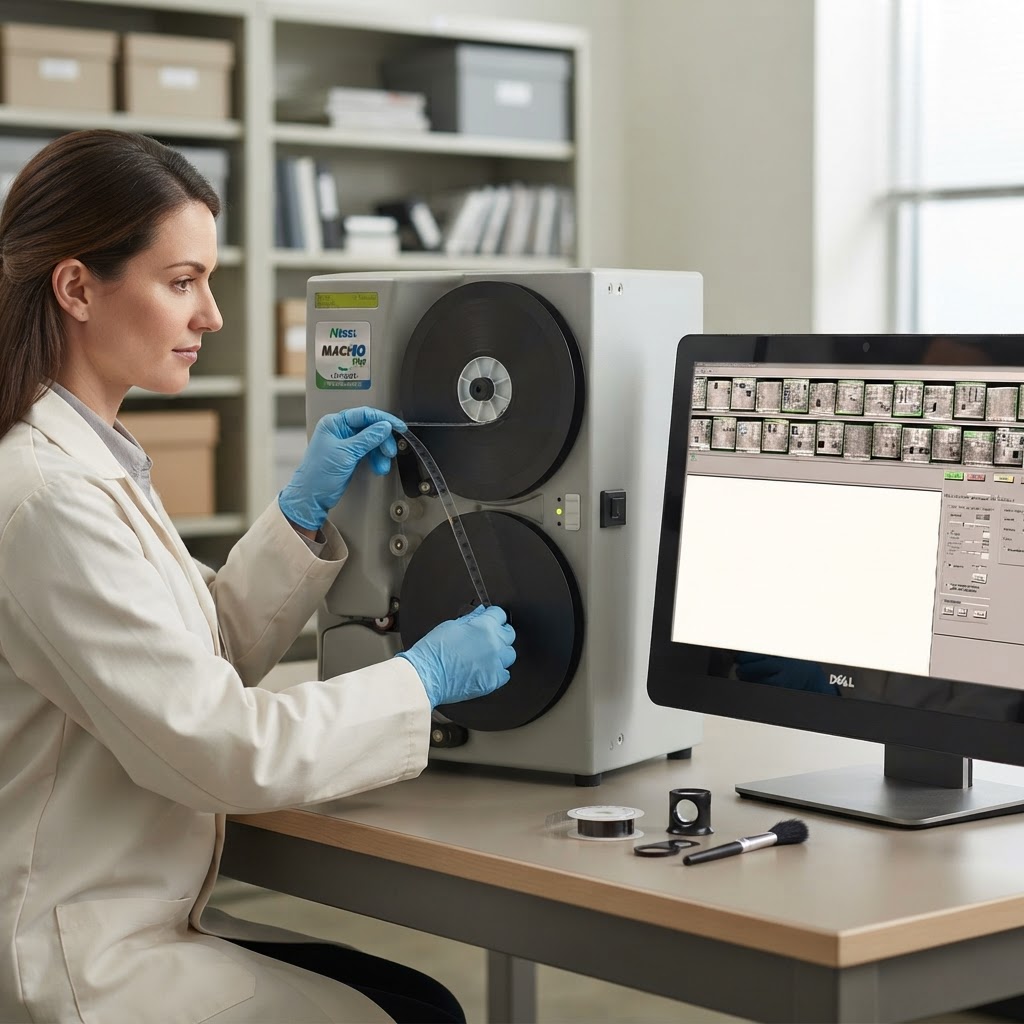
When documents originate from paper, IDP workflows are often connected to structured document capture environments
- Services
Dyanix supports IDP implementation through:- workflow consultation
- solution implementation
- integration support
- training and onboarding
- ongoing optimization and support
Dyanix ensures IDP operates as part of a connected workflow rather than as an isolated software deployment.
How this connects to the broader solution
Intelligent Document Processing builds directly on structured document capture.
- Capture and digitization
Document Digitization & Capture ensures documents enter the workflow correctly.
- High-volume processing
Organizations processing large document volumes often combine IDP with Production Scanning Solutions.
- Complex and non-standard formats
Specialized Document Scanning workflows support books, maps, microfilm, and other materials requiring dedicated handling and capture technologies.
- Accessibility and preservation-focused workflows
Structured information can support long-term accessibility and compliance-focused workflows through Digital Preservation & Compliance solutions.
Dyanix connects capture, processing, and integration into structured workflows that support operational efficiency and accessibility.
Built around your operational workflows
Every organization processes documents differently. Requirements depend on document types, operational processes, integration needs, and compliance considerations.
Dyanix supports organizations through:
- analysis of document workflows
- technology
- analysis of document workflows
- technology selection
- workflow configuration
- user onboarding and training
- ongoing support and optimization
Our approach focuses on building practical and scalable workflows that align with real operational requirements.
Turn documents into operational data
Documents should not slow down your workflows. Intelligent Document Processing helps organizations transform unstructured information into structured, usable data that supports efficiency, accessibility, and automation.
Frequently asked questions
Helping you make informed decisions
IDP is commonly used in document-intensive sectors such as finance,insurance, healthcare, government, logistics, and customer onboarding. It isalso suitable for organizations that want to extract data from large volumes ofincoming documents.
IDP can process many document types, including invoices, forms,contracts, receipts, applications, PDFs, scanned documents, and emailattachments. The exact possibilities depend on the document type, quality, andworkflow requirements.
Intelligent Document Processing, or IDP, uses AI and automation toclassify documents, extract key data, and turn unstructured content intostructured information that can be used in business applications.
Scanners work by using a light source to illuminate the document. The reflected light is captured by sensors, which convert the light into digital data. This data is then processed to create a digital image that can be saved on a computer or other devices. The quality of the scanned image depends on the scanner's resolution, measured in dots per inch (DPI). Higher DPI settings result in better image quality but larger file sizes.
Related solutions

Find the right solution for your workflow
Talk to a Dyanix specialist about your requirements, challenges, and the best approach for your organization.