7 Benefits of Single Sign-On
One set of credentials, access to every application your people need. Why Single Sign-On strengthens security, simplifies management and removes friction from the working day.
7 Benefits of Single Sign-On
Single Sign-On, or SSO for short, is a key component of any digital workspace. It supports more robust security, makes your portfolio of enterprise applications easier to manage and ensures a much better and less fragmented user experience., If you want to provide simplicity and security then SSO is a no-brainer.
What is Single Sign-On?
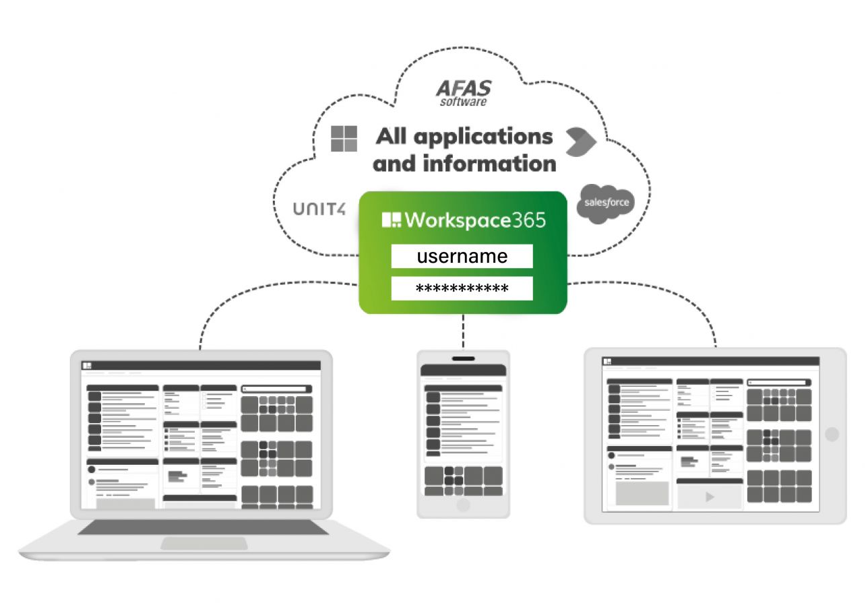
Single Sign-Onallows users to log in to multiple independent applications whilst using only one username and password. This means, they will only have to remember one log in details and will log in once in order to gain access to all the different applications they need to perform their tasks.
SSO is typically applied so that when an employee logs in to a company network, they can effortlessly access all of the different digital workplace applications they need. From a technical perspective, other common authentication schemes provide an SSO-like experience but are not necessarily Single Sign-On.
What are the benefits of Single Sign-On?
- Improved digital employee experience
- Saving time and raising productivity
- Better adoption of applications
- Easier rollout of new applications
- Safe SSO with more robust digital workplace security
- Reduce pressure on your IT helpdesk for the overall digital workplace
- Support for a single, integrated digital workspace
1. Improved employee experience
There is nothing more frustrating than having to enter your username and password over and over again, the most obvious benefit of Single Sign-On is that it makes life much easier for employees. With SSO, they do not have to enter their usernames and passwords multiple times across each application they use. The simplicity of SSO makes using applications in your digital workspace effortless and seamless, leading to a less fragmented user experience and happier employees.
2. Saving time and raising productivity
With SSO, employees can avoid the wasted time associated with entering credentials or trying to find passwords, time that can be better spent elsewhere. Single Sign-On saves employees approximately24 hours per year and raises their productivity. The impact is enormous across the entire workforce.
3. Better adoption of applications
Single Sign-On supports better adoption of different applications across your digital workspace by removing the barriers associated with authenticating the different tools that employees need. Employees are more likely to use new applications if they do not have to go through the log-in setup process every time.
4. Fewer IT support tickets
Single Sign-On helps IT and digital teams to roll out new applications to employees. First impressions are important when launching a new tool, so seamless authentication for users is a must. The reduced associated effort makes it far easier to get employees to try a new application and also keeps pressure off busy IT helpdesks so they can focus on higher-value activities.
SSO helps to create a seamless authentication process when IT and digital teams are rolling out new applications. This reduces the pressure on IT helpdesks allowing them to focus on higher-value activities.
5. Safer and more robust digital workplace security
SSO provides robust digital workspace security by allowing employees to create a strong password for all applications, apply multi-factor authentication, and allowing the IT department to remove access from previous employees easily.
SSO reduces risks associated with poor password management. Employees are able to use strong passwords for all applications without the concern that they won’t be able to remember them as they can access them through their Single Sign-On portal.
You can also apply multi-factor authentication to SSO, such as a one-time passcode sent to a mobile device, to help ensure robust security is in place.
A key challenge when managing digital tools is ensuring that when a person leaves an organisation, they no longer have access to the company’s applications. This process is very complex when multiple applications are in play, and mistakes can be made. SSO reduces risks associated with leavers, because when their ID is no longer valid across the network, it should mean they can no longer access individual systems
6. Reduce pressure on your IT helpdesk for the overall digital workplace
With SSO, your IT department will only have to manage a single username and password per employee. This will reduce the queries you get by having individual IDs for each application and also less change management effort when introducing new applications and digital tools.
It will do the heavy lifting around user management, with easier onboarding and offboarding of new employees and leavers, and the ability to support easier password changes from users.
7. Support for a single, integrated digital workspace
Single Sign-On supports having a single, integrated digital workspace such as Workspace 365 where employees can quickly access everything they need to perform their roles efficiently. Ensuring employees do not have to reauthenticate once they are within the digital workspace environment is essential to successfully delivering a seamless experience and all its related benefits.
Ready to digitise your documents?
Lorem ipsum dolor sit amet, consectetur adipiscing elit, sed do eiusmod tempor incididunt ut labore et dolore magna aliqua. Ut enim ad minim.